Essential SEO Checklist for Beginners: Rank Higher in 2026
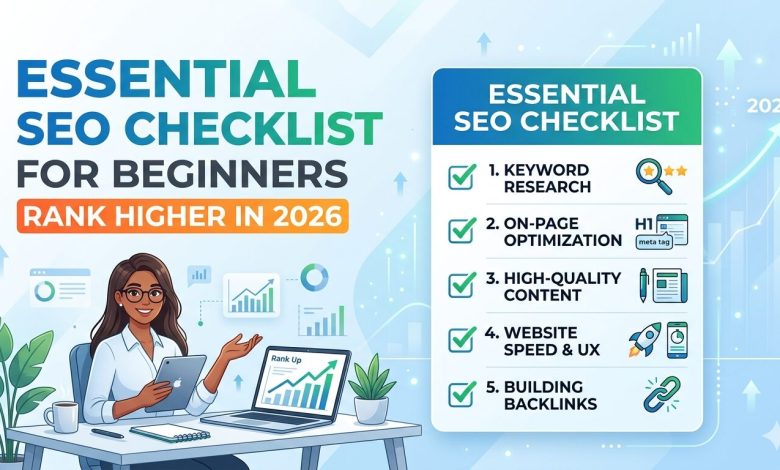
Stepping into the world of Search Engine Optimization (SEO) can feel like navigating a complex maze. For many beginners, the sheer volume of information and technical jargon can be overwhelming, leading to paralysis by analysis. However, mastering SEO is no longer optional; it’s a fundamental requirement for any website or online business aiming to gain visibility and attract organic traffic. The good news is that with a structured approach, you can systematically optimize your site to compete and rank higher. This comprehensive SEO checklist for beginners is designed to demystify the process, providing clear, actionable steps to help you climb the search engine results pages (SERPs) in 2026 and beyond.
1. Foundational On-Page SEO: Optimizing Your Content
On-page SEO refers to all the optimizations you can make directly on your website to improve its ranking. It’s about signaling to search engines what your content is about and demonstrating its relevance and quality to user queries.
- Keyword Research: The Bedrock of Visibility
- Identify your primary target keyword (e.g., “SEO checklist for beginners”) and related secondary keywords, including long-tail variations. Use tools like Google Keyword Planner, SEMrush, Ahrefs, or Ubersuggest to find terms with reasonable search volume and manageable competition.
- Understand user intent: What are people truly looking for when they type these keywords? Is it information, a product, a service, or a comparison? Align your content with this intent.
- Craft Compelling Title Tags & Meta Descriptions
- Your title tag is the clickable headline in search results. It should be concise (under 60 characters), include your primary keyword, and accurately describe the page’s content. Make it engaging to encourage clicks.
- The meta description (around 150-160 characters) provides a summary. While not a direct ranking factor, a well-written meta description with a call to action significantly boosts click-through rates (CTR).
- Strategic Use of Header Tags (H1, H2, H3)
- Each page should have one H1 tag, which typically mirrors your page title and includes your primary keyword.
- Use H2 and H3 tags to break up your content into readable sections and include secondary keywords. This improves readability for users and helps search engines understand your content’s structure and hierarchy.
- High-Quality, Engaging Content
- Create original, valuable, and comprehensive content that thoroughly addresses the user’s query. Aim for depth and provide unique insights.
- Naturally integrate your primary keyword and relevant secondary keywords throughout the content. Avoid keyword stuffing, which can harm your rankings. Focus on readability and providing value.
- Image Optimization
- Compress image files to reduce page load times without sacrificing quality.
- Use descriptive alt text for all images. Alt text helps search engines understand image content and improves accessibility for visually impaired users. Include relevant keywords where appropriate.
- Clean, Descriptive URL Structure
- Create short, simple, and keyword-rich URLs (e.g.,
yourwebsite.com/seo-checklist-for-beginners). Avoid long, cryptic URLs with unnecessary characters.
- Create short, simple, and keyword-rich URLs (e.g.,
2. Technical SEO Basics: Ensuring Search Engine Crawlability
Technical SEO focuses on optimizing your website’s infrastructure to help search engines crawl, index, and render your site effectively. It’s the behind-the-scenes work that ensures your content can even be found.
- Mobile-Friendliness is Non-Negotiable
- With Google’s mobile-first indexing, your website must be responsive and offer an excellent experience on all devices. Use Google’s Mobile-Friendly Test to check your site.
- Prioritize Site Speed (Core Web Vitals)
- Slow websites frustrate users and get penalized by search engines. Optimize images, leverage browser caching, minimize CSS/JavaScript, and consider a Content Delivery Network (CDN).
- Focus on Core Web Vitals (Largest Contentful Paint, First Input Delay, Cumulative Layout Shift) as key performance indicators for user experience.
- Create and Submit an XML Sitemap
- An XML sitemap lists all the important pages on your website, helping search engines discover and index them more efficiently. Generate one (many CMS platforms do this automatically) and submit it via Google Search Console.
- Configure Your Robots.txt File
- The robots.txt file tells search engine crawlers which parts of your site they can and cannot access. Ensure it’s correctly configured to allow indexing of important pages and block unimportant ones (like admin areas).
- Implement an SSL Certificate (HTTPS)
- HTTPS provides a secure connection for your users and is a confirmed ranking signal. Ensure your website uses an SSL certificate. Most hosting providers offer free SSL certificates.
- Address Duplicate Content Issues with Canonical Tags
- If you have identical or very similar content accessible via multiple URLs, use canonical tags to tell search engines which version is the preferred (canonical) one. This prevents diluted ranking signals.
3. Off-Page SEO Essentials: Building Authority and Trust
Off-page SEO refers to actions taken outside of your website to impact your rankings. It’s primarily about building your site’s authority, relevance, and trust through external signals.
- Strategic Backlink Building
- Backlinks (links from other websites to yours) are powerful votes of confidence. Focus on acquiring high-quality, relevant backlinks from authoritative sites in your niche.
- Methods include guest posting, broken link building, creating shareable content, and reaching out to industry influencers. Quality over quantity is crucial.
- Leverage Social Media for Visibility
- While social signals aren’t direct ranking factors, social media drives traffic to your site, increases brand visibility, and encourages engagement, which can indirectly lead to backlinks and mentions.
- Share your content across relevant platforms and engage with your audience.
- Local SEO Optimization (If Applicable)
- If you have a local business, optimize your Google My Business (GMB) profile completely and accurately. Include your business name, address, phone number (NAP), hours, photos, and services.
- Build consistent NAP citations across online directories. Encourage and respond to customer reviews.
- Online Reviews and Reputation Management
- Positive online reviews on Google, Yelp, and industry-specific sites can boost local SEO and build trust with potential customers. Actively solicit reviews and respond to all feedback, positive or negative.
4. User Experience (UX) & Analytics: Keeping Visitors Engaged
Search engines prioritize websites that offer a great user experience. If visitors quickly leave your site (high bounce rate), it signals low quality. Understanding how users interact with your site is key to sustained ranking.
- Intuitive Navigation and Clear Structure
- Ensure your website has a logical, easy-to-understand navigation menu. Users should be able to find what they’re looking for within a few clicks.
- Use internal linking strategically to guide users to related content and help search engines discover deeper pages.
- Readability and Content Formatting
- Use short paragraphs, bullet points, numbered lists, and ample white space to make content easy to scan and read.
- Employ clear, concise language and avoid overly complex sentences.
- Strategic Call-to-Actions (CTAs)
- Guide your users towards their next step, whether it’s signing up for a newsletter, downloading a resource, or making a purchase. Clear CTAs improve user flow and conversion rates.
- Set Up Google Analytics & Google Search Console
- Google Analytics provides invaluable data on user behavior: traffic sources, popular pages, time on site, bounce rate, and demographics.
- Google Search Console offers insights into your site’s performance in Google search: keywords users searched for, indexing status, crawl errors, and mobile usability issues. This is a critical tool for any SEO checklist for beginners.
- Regularly monitor these tools to identify areas for improvement and track your SEO progress.
5. Staying Current: The Evolving Landscape of SEO in 2026
SEO is not a static field. Algorithms change, new technologies emerge, and user behaviors evolve. To rank higher and maintain your position, continuous learning and adaptation are essential.
- Stay Informed on Algorithm Updates
- Google frequently rolls out algorithm updates, some minor, some major. Follow reputable SEO news sources and industry blogs to understand the impact of these changes on your strategy.
- Embrace E-E-A-T (Experience, Expertise, Authoritativeness, Trustworthiness)
- Google increasingly emphasizes E-E-A-T, especially for YMYL (Your Money Your Life) topics. Demonstrate your expertise, provide evidence of authority, and build user trust through transparent, accurate, and high-quality content.
- Showcase author bios, credentials, and external validations where appropriate.
- Responsible AI Content Integration
- While AI tools can assist with content creation, ensure any AI-generated content is thoroughly reviewed, fact-checked, and human-edited to ensure originality, accuracy, and adherence to E-E-A-T principles. Google rewards helpful, original content, regardless of how it’s produced.
- Continuous Learning and Adaptation
- SEO is a marathon, not a sprint. Regularly review your performance data, experiment with new tactics, and refine your strategy based on what works for your specific niche and audience.
Mastering SEO for your website begins with a solid foundation and a clear plan. This comprehensive SEO checklist for beginners provides a robust roadmap to get you started and help you achieve higher rankings in 2026. Remember, consistency and patience are key. Implement these steps systematically, monitor your progress using tools like Google Analytics and Search Console, and be prepared to adapt as the digital landscape evolves. Start taking action today, and watch your website climb the search results, bringing valuable organic traffic to your doorstep.